
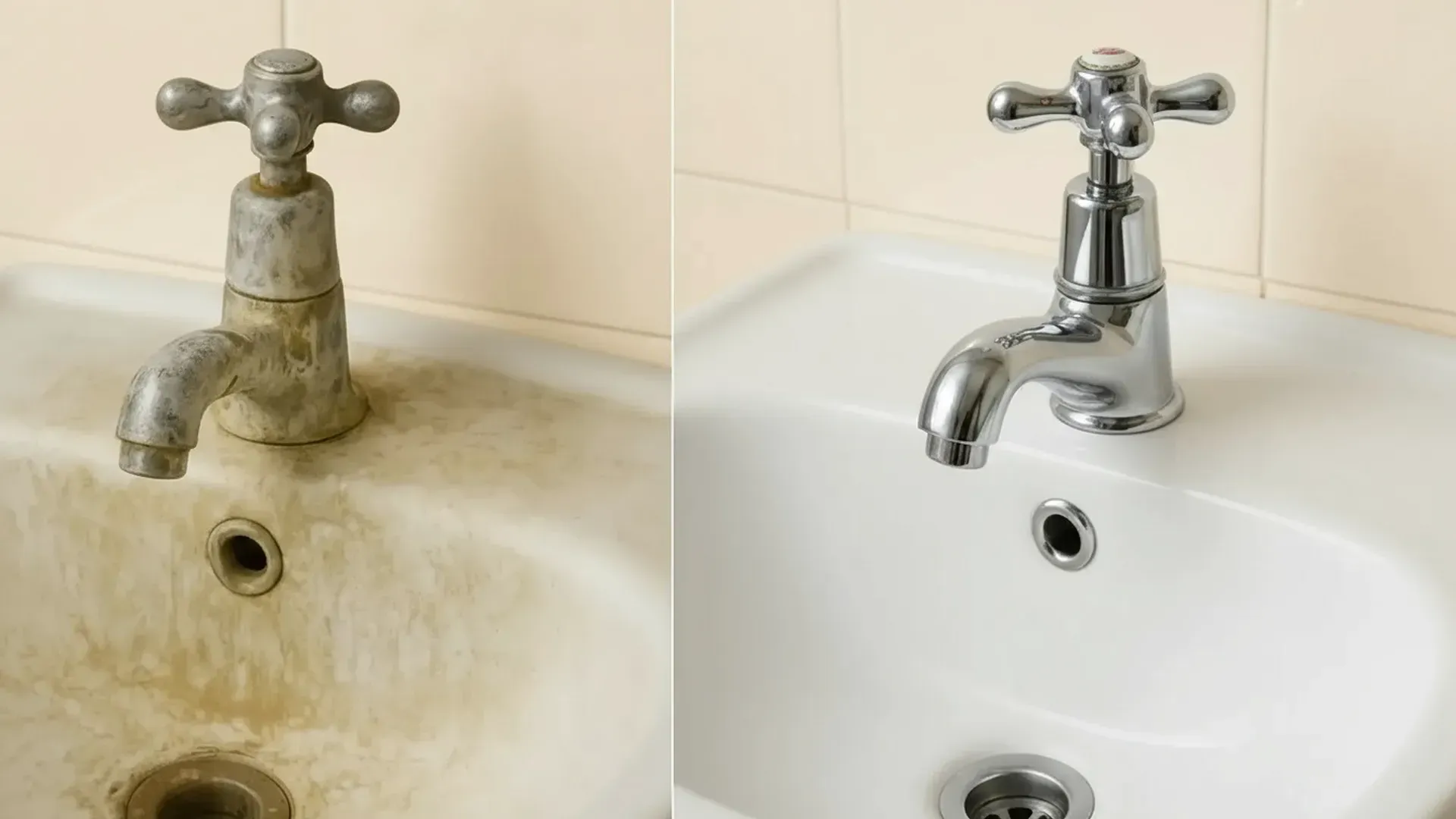
Even when we clean regularly, a bathroom can still look a little “off” because mineral film and orange discoloration tend to cling to fixtures, tile, and glass. The good news is that you don’t need specialty products to restore shine and clarity. With a few common pantry staples, it’s possible to tackle hard water stains, dull buildup, and rust stains in a way that’s straightforward and easy to repeat. The trick isn’t scrubbing harder—it’s using the right ingredient, giving it time to work, and finishing with a quick routine that keeps new deposits from settling in.
Why mineral buildup and rust show up so fast
Most of the stubborn white haze comes from minerals left behind as water evaporates, often called limescale. On showerheads, faucets, and tile edges, repeated wetting and drying creates layer after layer until the surface starts looking cloudy. Rust marks typically appear where water sits on metal or where tiny scratches and worn finishes allow moisture to linger. The longer either problem stays in place, the more it bonds to the surface texture, which is why a “quick wipe later” can turn into a bigger job. Regular, short cleanups keep deposits from turning into hardened buildup.
Pantry basics that work (and why they work)
Three familiar ingredients handle most bathroom buildup because they target different parts of the mess. Vinegar and lemon juice are acidic, which helps dissolve mineral deposits that cause cloudy film. Baking soda adds gentle abrasion and helps lift grime without relying on harsh grit. Table salt can add a little extra scrub power when used carefully, especially on small, stubborn spots. The biggest mistake is rinsing too quickly; these mixtures perform best when they sit on the surface long enough to loosen the deposit before wiping.
Letting a simple solution sit for 15–30 minutes often matters more than scrubbing strength, because it gives minerals time to break down.
Four practical methods to remove buildup and slow its return
1) Vinegar for mineral film on fixtures and glass
Fill a spray bottle with plain white vinegar and coat the areas with visible mineral haze—faucets, shower doors, and tile near the tub line. Leave it for about 15–20 minutes, then wipe with a soft cloth or non-scratch sponge and rinse with water. For thicker patches, make a paste by mixing vinegar with a small amount of baking soda, apply it only where needed, wait a few minutes, and wipe gently. Watching the dull film lift can feel surprisingly satisfying, especially on chrome.
2) Lemon juice (and a pinch of salt) for rust marks
Squeeze fresh lemon juice directly onto the orange discoloration and let it sit for roughly 30 minutes. The citric acid helps loosen the stain so it can wipe away more easily with a soft sponge or brush. If the mark is stubborn, sprinkle a light pinch of table salt over the spot before adding the lemon juice; the salt acts like a mild scouring aid without the deep scratching that rough pads can cause. Rinse thoroughly when finished so residue doesn’t dry back onto the surface.
3) Baking soda paste for stuck-on spots
Mix baking soda with a small amount of water until it forms a thick paste. Spread it over problem areas where mineral buildup or discoloration lingers, and let it sit for about 15 minutes. Then rub in gentle circular motions with a damp sponge and rinse well. Baking soda works as a mild abrasive, so it can lift what acidic sprays loosen while staying more surface-friendly than many gritty cleaners. If a spot doesn’t budge, repeat the same approach rather than switching to aggressive scrubbing.
4) Prevent new deposits with a fast post-shower routine
To keep limescale from reappearing, remove leftover water before it dries. A quick wipe of glass, faucets, and sink edges with a dry microfiber cloth after showering makes a noticeable difference over time because fewer droplets remain to leave mineral residue. It also helps to occasionally unscrew and rinse the faucet aerator (the small screen at the tip of the spout) so minerals don’t build up inside and reduce flow. Combined, these small habits keep surfaces clearer and make deep cleaning sessions less frequent.




Leave a Reply