

Every day, large amounts of fruit waste are generated from homes, juice shops, and
markets. Most of this waste ends up in landfills, creating environmental pollution. But what
if this waste could be transformed into something useful, eco-friendly, and economical?
Eco-enzyme is one such sustainable solution. Derived from citrus fruit waste, eco-enzyme
represents a simple yet powerful way to convert kitchen waste into a multi-purpose natural
product.
What Is an Eco-Enzyme?
Eco-enzyme is a dark brown, fermented liquid produced by fermenting fruit peels with
sugar and water. It has a pleasant sweet-and-sour smell, especially when citrus fruits are
used. Scientifically, it is similar to organic vinegar but enriched with natural enzymes and
bioactive compounds.
Why Use Citrus Fruit Waste?
Citrus fruit peels such as orange, lemon, and sweet lime are rich in vitamin C, natural acids,
and medicinal compounds. They also provide a strong fragrance and enhance fermentation
efficiency. Because of these properties, citrus waste is ideal for eco-enzyme production.
How Is Eco-Enzyme Made?
The process of making eco-enzyme is simple and low-cost, making it suitable for households
and communities.
Ingredients:
- Citrus fruit peels
- Brown Sugar
- Water
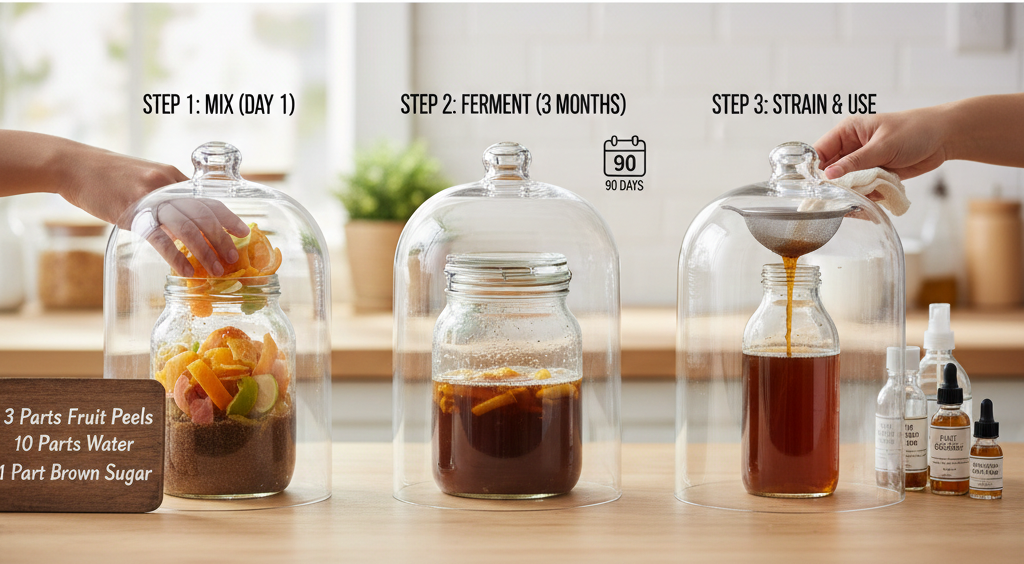
Standard ratio used:
Fruit peels : Water : Brown sugar = 3 : 10 : 1
The mixture is stored in an airtight container and fermented for three months.
What Does Eco-Enzyme Contain?
Laboratory analysis of eco-enzyme revealed the presence of important enzymes such as
protease, amylase, and lipase. These enzymes help break down proteins, starch, and fats,
explaining its strong cleaning ability.
It also contains beneficial bioactive compounds like flavonoids, alkaloids, quinones, and
saponins, which contribute to its antimicrobial and insect-repellent properties.
Applications of Eco-Enzyme
- Plant Growth Enhancement:
Eco-enzyme improves seed germination, enhances plant vigor, and supports healthy soil
biology. - Household Cleaning:
Due to its acidic nature and enzymatic action, eco-enzyme is effective for cleaning floors,
utensils, bathrooms, and tiles without producing harmful fumes. - Natural Pest Repellent:
Eco-enzyme helps repel mosquitoes and insects safely, making it a natural alternative to
chemical sprays.
Cost Effectiveness and Sustainability
Eco-enzyme is extremely economical. It is produced using waste materials and minimal
investment. Compared to commercial cleaners, eco-enzyme is cheaper, biodegradable, non
toxic, and environmentally safe.
Conclusion
Eco-enzyme demonstrates how simple biological processes can address major
environmental challenges. By converting citrus fruit waste into a valuable, multi-purpose
product, eco-enzyme promotes sustainable living, reduces waste, and minimizes
dependence on chemical-based products.
Sometimes, the most impactful environmental solutions begin right in our kitchens.




Leave a Reply